
NATO’s Northern Flank: Countering Russia & China Expansion in the Arctic

By Matthew Van Wagenen & Arnel P. David
October 10, 2024
While the world remains fixated on Russia's war in Ukraine, Moscow is strategically expanding its influence globally. With a firm foothold in the Middle East supporting Iran and sending support to the Houthis, and growing involvement in Central Africa, Russia's next strategic objective appears to be the High North and the Arctic. This ambition, coupled with increasing collusion with China, presents a new and complex dilemma for NATO, forcing the alliance to adapt to evolving threats in a region of increasing geopolitical importance.
Russia’s Arctic Ambitions
Driven by a desire to control vital transit routes, exploit vast natural resources, and project military power, Moscow's aspirations in the Arctic are multifaceted and alarming. This manifests in several key ways:
Hybrid Threats: Russia is employing a range of hybrid tactics, including cyberattacks, disinformation campaigns, and the use of proxies to conduct surveillance and sabotage critical infrastructure in the High North. The Russian Underwater Reconnaissance Programme (RURP) concentrated in the Kola Peninsula has capabilities far beyond the Arctic region. Norwegian intelligence services have warned of an increased risk level, highlighting the growing threat to NATO's northern flank. Russia reorganized its Western Military District into the new Moscow Military District and the Leningrad Military District. The latter command is established to posture against NATO in the High North and the Baltic Region after the addition of Sweden and Finland into the Alliance.
Conventional Military Activity: Russia is bolstering its conventional military presence in the Arctic, with a focus on subsurface, maritime, and air capabilities. The recent OCEAN 24 exercise, while potentially exaggerated in scope, demonstrated Moscow's commitment to dominating the region. The transfer of nuclear submarines from the Pacific fleet to the Barents Sea during the exercise underscores this ambition. This buildup includes the modernization and expansion of Arctic bases, deployment of advanced anti-access/area denial (A2/AD) systems, and increased submarine patrols. While a portion of Russia’s military in the High North can be understood as routine, other activities are more squarely aimed at challenging NATO's freedom of movement and access to the region.
Strategic Partnerships: Perhaps most concerning is Russia's growing cooperation with China in the Arctic. Joint naval drills in the North Pacific during OCEAN 24 signal a potential shift in the regional dynamics. This partnership, unthinkable just a few years ago, could lead to new northern trade routes and pose a significant challenge to NATO's interests. This collaboration extends beyond military exercises to include joint research expeditions, infrastructure development projects, and resource exploration, solidifying a strategic axis with the potential to reshape the Arctic landscape.
NATO's Response
The accession of Finland and Sweden into NATO is a game-changer for the alliance's posture in the High North and beyond. Among other contributions, this pair of new Allies means that NATO is smarter and more informed about Russian capabilities and intentions. This strengthens the alliance's presence and provides a unified front against Russian ambitions. The now 32-nation strong NATO is responding to the aforementioned challenges in several ways:
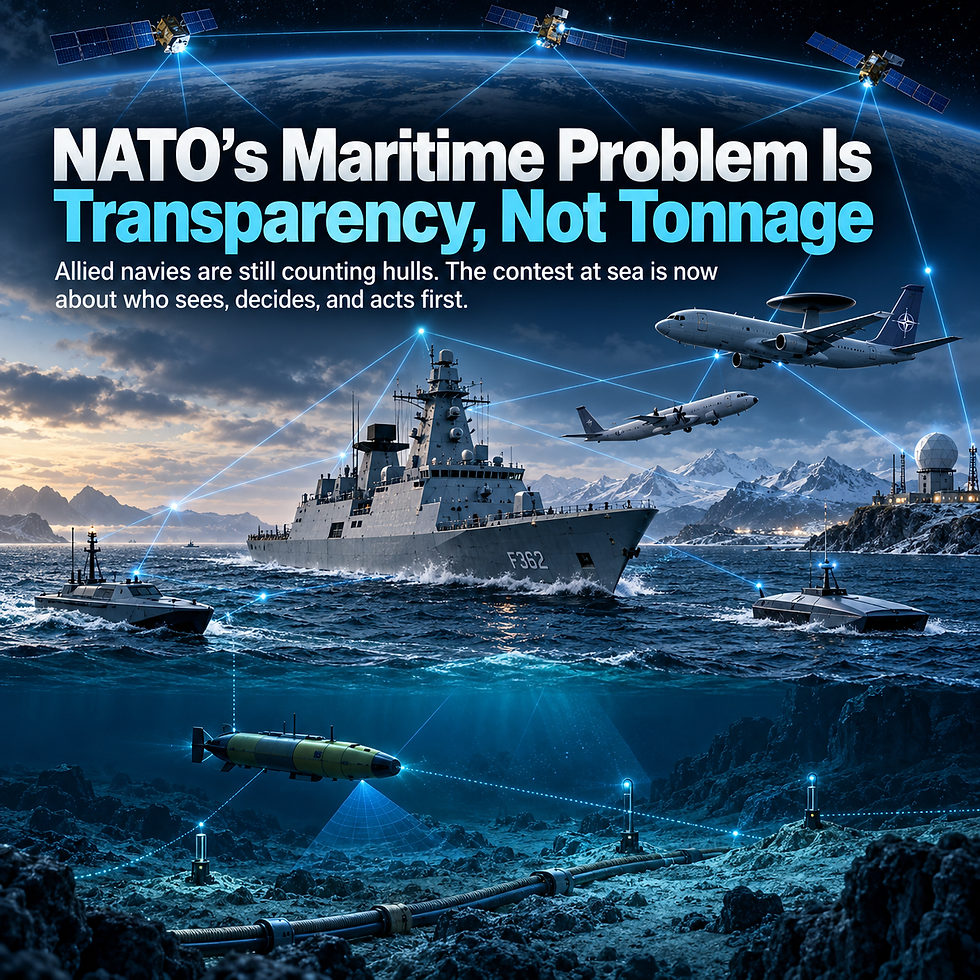
Enhanced Command and Control: NATO is establishing new command structures, including the Joint Force Command (JFC) Norfolk, and developing Multi-Domain Command and Control (MDC2) capabilities to improve coordination and responsiveness in the region. The Supreme Headquarters Allied Powers Europe (SHAPE) has transformed into a strategic warfighting headquarters which is revitalizing the Alliance’s collective defense system, integrating new targeting capabilities and artificial intelligence applications. This enhanced C2 structure enables NATO to better monitor and respond to threats across all domains, including the increasingly important space and cyber domains.
Forward Presence: The alliance is increasing its forward presence in the High North, with more frequent exercises and deployments of land, sea, and air forces. Finland is setting up a new land command, a Multi Corps Land Component Command, which will integrate forces from Sweden and other NATO nations. This demonstrates NATO's commitment to collective defense and deters potential Russian aggression in the region. This increased presence includes the deployment of advanced air and missile defense systems, as well as the prepositioning of equipment and supplies to ensure rapid reinforcement capabilities.
Integrated Planning: NATO is developing new plans focused on maintaining its advantage in the Arctic, considering the evolving threat landscape and the capabilities of its newest members. These dynamic plans prioritize collective defense, deterrence, and crisis response. They are directly linked to NATO’s Concept for Deterrence and Defence of the Euro-Atlantic Area (DDA). This integrated approach recognizes the interconnected nature of modern warfare and emphasizes the need for a comprehensive and coordinated response to any aggression.
Arctic Exercises: NATO is conducting more frequent and complex exercises in the Arctic, enhancing interoperability and readiness among allies. These exercises also serve as a visible demonstration of NATO's commitment to the region. These exercises involve a wide range of scenarios, including air defense, anti-submarine warfare, and amphibious operations, ensuring that NATO forces are prepared to operate effectively in the challenging Arctic environment.
Conclusion
As stated in its Strategic Concept, NATO “does not seek confrontation and poses no threat to the Russian Federation.” Yet Russia's growing ambitions in the Arctic, coupled with its burgeoning partnership with China, pose a significant challenge to NATO. In fact, it’s capability to disrupt Allied reinforcements and freedom of navigation across the North Atlantic poses a strategic challenge. The alliance is adapting to this new reality by strengthening its command and control, enhancing its forward presence, developing integrated plans, and conducting regular exercises in the region. The inclusion of Finland and Sweden is a critical step in bolstering NATO's defenses and ensuring the security of its northern flank. JFC Norfolk is bringing it all together and establishing an unprecedented level of combat power in the High North. The evolving dynamics in the Arctic require continued vigilance and adaptation from NATO but it is clear it will do everything it can to maintain its strategic advantage in this increasingly important region.
Authors
Matthew Van Wagenen is a major general in the U.S. Army currently serving as the Deputy Chief of Staff for Operations (DCOS OPS) in the NATO Supreme Headquarters Allied Powers Europe (SHAPE).
Arnel P. David is a colonel in the U.S. Army currently serving as the director of the Strategic Initiatives Group (SIG) in the NATO Supreme Headquarters Allied Powers Europe (SHAPE).


Comments